
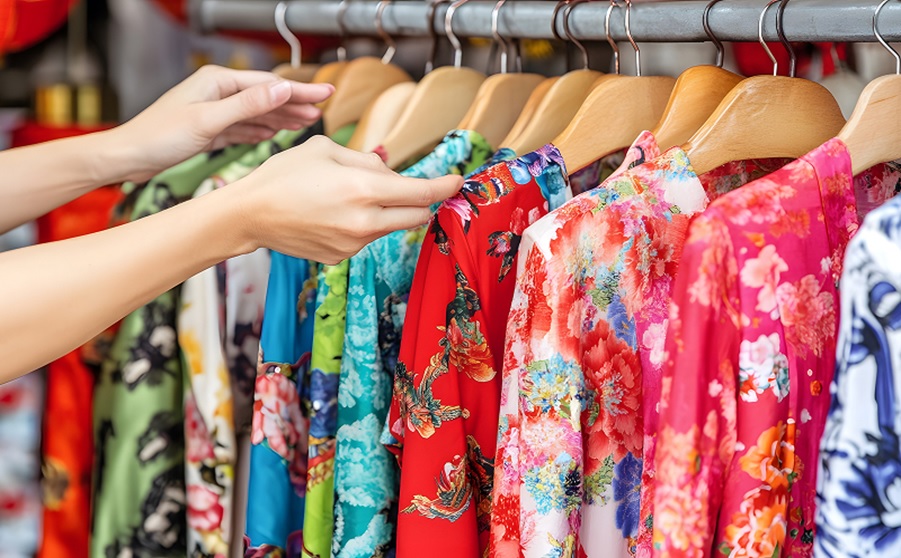
A cheongsam and a linen shirt rarely get asked to do the same job in a wardrobe, and that’s by design, not accident. One is built for the moment that calls for something with weight and history behind it. The other is built for every ordinary day in between those moments. Anmako happens to carry both, which makes it easy to miss how differently each one was actually made to be worn.
The Weight a Batik Cheongsam Is Carrying
A Nyonya batik cheongsam isn’t just a patterned dress with a fitted silhouette. The batik tradition it draws on comes out of Peranakan culture, where hand-drawn or stamped wax-resist patterns were passed between generations of women as both a craft and a form of personal identity. Anmako’s cheongsam line keeps that visual language (dense florals, structured borders, a particular density of pattern) while cutting the silhouette for how people actually sit, move, and photograph at a modern event rather than a museum display case.
The Occasions This Gets Pulled Out For
- Chinese New Year reunion dinners, where a patterned cheongsam reads as effort without reading as costume
- Weddings and engagement ceremonies, either as the guest’s outfit or part of a tea ceremony changeover
- Mid-Autumn Festival and other cultural celebrations where the batik print itself carries meaning
Why Linen Solves a Completely Different Problem
Linen and the cotton-linen blends Anmako works with aren’t trying to carry any of that symbolic weight. The job here is purely practical: a fabric that breathes in Singapore’s humidity, softens rather than pills with repeated washing, and drapes in a way that doesn’t cling after a few hours of wear. Where the batik pieces lean into pattern and occasion, the linen pieces lean into texture and restraint, usually in muted, uncomplicated tones that pair easily with whatever else is already in a wardrobe. It’s the kind of piece that gets worn far more often than the cheongsam ever will, simply because it isn’t waiting for a specific date on the calendar.
The Japanese Influence Behind the Cut
Anmako’s linen clothing in Singapore borrows its silhouette logic from Japanese daywear rather than from the cheongsam’s fitted lines: looser through the body, often with dropped shoulders or a boxier cut that leaves room for the heat to move rather than trapping it against the skin. It’s the kind of cut that favours comfort over a defined waistline, which is exactly the trade most people are making when they reach for linen over a more structured fabric in the first place.
Choosing Between the Two Isn’t Really the Point
Treating these two collections as competing choices misses what they’re each actually solving. Someone building a wardrobe around Anmako’s range isn’t choosing batik over linen or the other way around; they’re usually assembling pieces for two different categories of day entirely: the handful of occasions that call for something with presence and the far larger number of days that just call for something comfortable enough to forget about by midmorning.
A Few Ways to Let the Two Overlap
The two don’t have to stay in completely separate boxes. A cropped batik jacket thrown over a plain linen dress turns an everyday piece into something with enough presence for a smaller celebration, without committing to a full cheongsam. Pairing a linen skirt with a batik-print top does the reverse: the pattern gets a moment without asking the whole outfit to carry the weight of a formal occasion. The mixing works best when one piece stays quiet so the other can actually be seen, rather than layering two statement pieces against each other.
Caring for Each Fabric Properly
The two collections also ask for different handling once they’re home. Batik pieces, especially those with hand-applied or dense printwork, generally hold their colour and pattern longer with gentle hand-washing or dry cleaning rather than a standard machine cycle, and should be dried away from direct sunlight to keep the dye from fading unevenly. Linen and cotton-linen blends are more forgiving of regular washing but benefit from being worn and washed a few times before the texture settles into its softest, most comfortable state, so a stiff first wear isn’t a sign anything’s wrong with the piece.
Whichever side of the wardrobe needs filling first, Anmako’s team can point to sizing and fabric specifics that aren’t always obvious from a product photo alone. Contact Anmako with the occasion or the everyday gap you’re dressing for, and they can narrow down which piece actually fits the brief.